The Quiet Signs of Pain in Cats
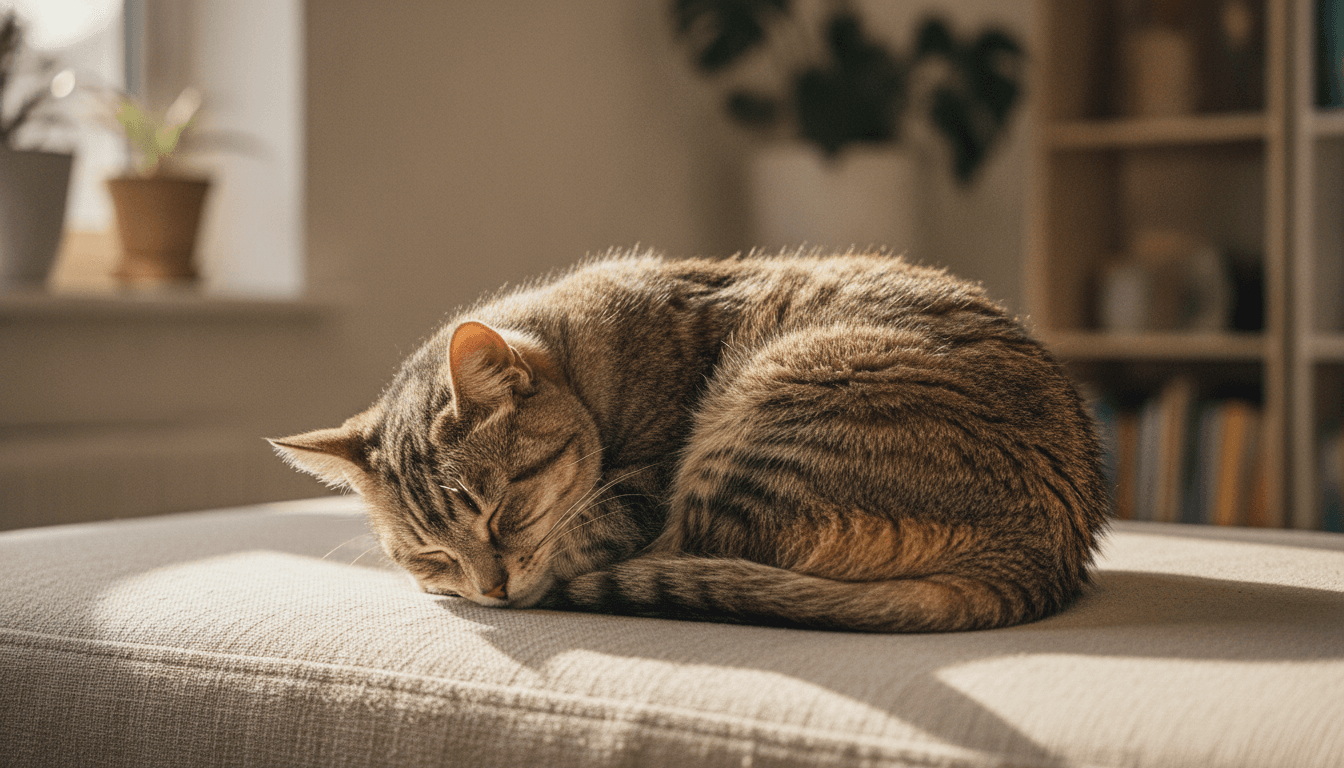
If dogs are stoic, cats are secretive. A cat can be seriously unwell and still, to the casual eye, look like a cat having an ordinary week. This is not stubbornness on their part. It is deeply wired self protection, and it means the families I visit are almost never negligent. They simply were not shown what to look at.
The hunched loaf
A comfortable cat sprawls. They stretch out, they expose their belly, they drape themselves over furniture. A cat in pain tucks: paws folded underneath, shoulders rounded, tail wrapped tight. If your cat has adopted a compact, contained posture and holds it for hours, pay attention to that.
A coat that has stopped being maintained
Grooming is one of the first things to go. Arthritic cats cannot twist to reach their back and hindquarters, so the fur there turns dull, greasy, or clumped while the front stays tidy. Over grooming one specific patch is the reverse signal and worth just as much attention.
New sleeping places
A cat who has slept in the same sunny spot for nine years and now sleeps somewhere dark, hard to reach, or oddly low to the ground is making a decision based on something. Cats who cannot jump well will quietly relocate downward rather than struggle upward in front of you.
Missing the litter box
This is so often read as behavioral, and it is so often physical. A box with high sides becomes a painful climb for a cat with sore hips. Before assuming spite or stress, try a box with a low entry and see whether the problem simply evaporates.
About purring
Purring is the most misread signal in cat medicine. Cats purr when content, yes, but they also purr when frightened, injured, and dying. It is partly a self soothing behaviour. I have examined cats with serious disease who purred throughout. Never let a purr talk you out of a concern that everything else supports.
What to do with what you notice
Write down what you see, with dates. Take a short video on your phone of how your cat moves across a room, because changes in gait are far easier to judge on playback than in the moment. Then talk to a veterinarian, whether that is your regular practice or me. Much feline discomfort is manageable, and a cat whose pain is properly controlled will often go back to sprawling, grooming, and reclaiming their sunny spot.
Need Help? We're Here 24/7
Our compassionate team is available to answer your questions and provide support.
Call (201) 452-3342