Making Your Home Easier for an Aging Pet
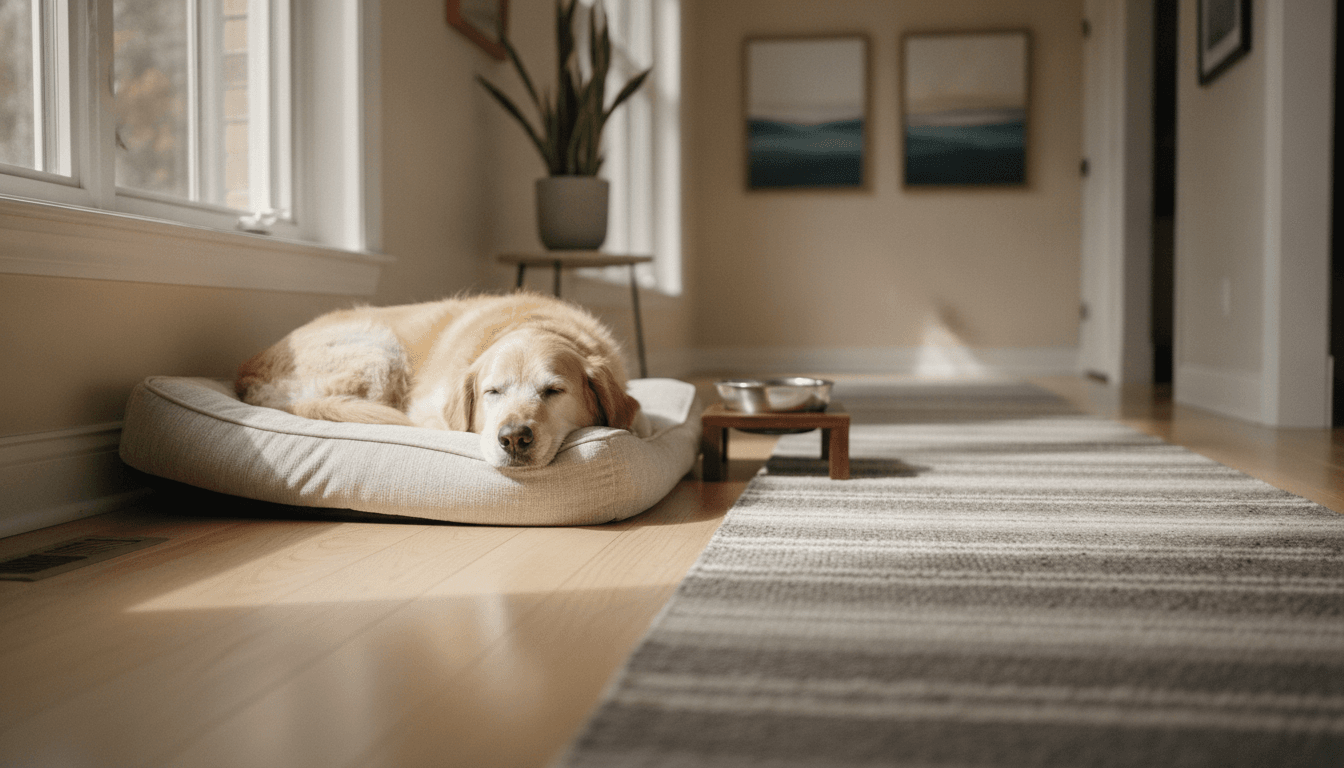
When I visit a home for a hospice or quality of life consultation, I spend as much time looking at the house as at the patient. A great deal of what limits an older animal is not the disease itself but the environment they have to negotiate with it, and the environment is usually the easier thing to change.
Flooring is the single biggest win
Hardwood, tile, and laminate are skating rinks for a dog with weak hindquarters. Every slip costs confidence, a dog who has lost confidence stops moving, and a dog who stops moving loses muscle, which makes the next slip likelier. It is a fast downward spiral and it starts with the floor.
Lay a path of inexpensive runners or yoga mats along the routes your dog actually uses: bed to door, bed to water, bed to your chair. It does not need to be pretty and it does not need to cover the room. It needs to be continuous.
Beds: supportive, and in the right place
Older joints need support rather than softness. A deep, sink in bed is hard to climb out of. Firm orthopedic foam with a low entry is easier on the way in and the way out.
Placement matters as much as the bed itself. Older animals want to stay near their people. If your dog is sleeping in a distant room, ask whether that is preference or because the journey to where you are became too hard.
Raise the bowls, lower the box
Elevating food and water bowls to chest height takes strain off the neck and shoulders of an arthritic dog. For cats, do the opposite where it counts: a litter box with one low side removes a painful climb, and an extra tray on the floor they already live on removes a trip up the stairs.
Light the night
Vision dims gradually and cognitive changes make the dark more disorienting. Inexpensive plug in night lights along the hallway and near the water bowl reduce night time anxiety and pacing more than most owners expect.
Traction and nails
Long nails change how the foot loads and make slipping worse. Keep them short. For dogs still slipping on unavoidable surfaces, toe grips or non slip socks help, though most dogs need a few days to accept them.
What this buys you
None of this treats disease. What it does is remove the daily friction that makes an older animal seem worse than they are, and it often reveals how much comfortable life is genuinely left. I regularly meet families who assumed they were near the end and discover, once the floors and the bed and the bowls were sorted, that they had months of good time still ahead of them.
Need Help? We're Here 24/7
Our compassionate team is available to answer your questions and provide support.
Call (201) 452-3342